Vaping Frequency and Health: What’s the Safe Range?
The relationship between vaping frequency and health is one of the most pressing questions for anyone who uses e-cigarettes. How many puffs

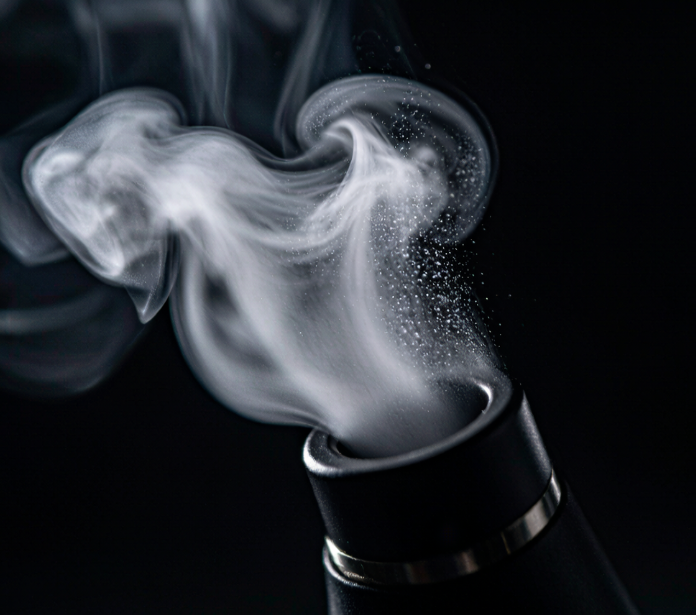
A transparent breakdown of e-cigarette aerosol, its ingredients, and what the science actually says.
If you’ve ever wondered what is in a vapor, you’re not alone. E-cigarette aerosol — commonly called vapour — is often misunderstood. Some people assume it’s just “water vapour”; others believe it’s as harmful as cigarette smoke. The reality sits somewhere in between.
This article breaks down exactly what is in a vapor, ingredient by ingredient, drawing on Health Canada regulations, peer-reviewed research, and publicly available chemical analyses. It covers e-liquid composition, what happens during heating, and how vapour compares to the smoke from combustible cigarettes.
Before examining what is in a vapor, it helps to understand what vapour actually is — and what it isn’t.
Vapour is the aerosol produced when an e-cigarette or vape device heats e-liquid. Despite the name, it is not water vapour. E-cigarette aerosol is a suspension of fine liquid droplets and gases, formed when the device’s coil reaches temperatures between roughly 200°C and 300°C.
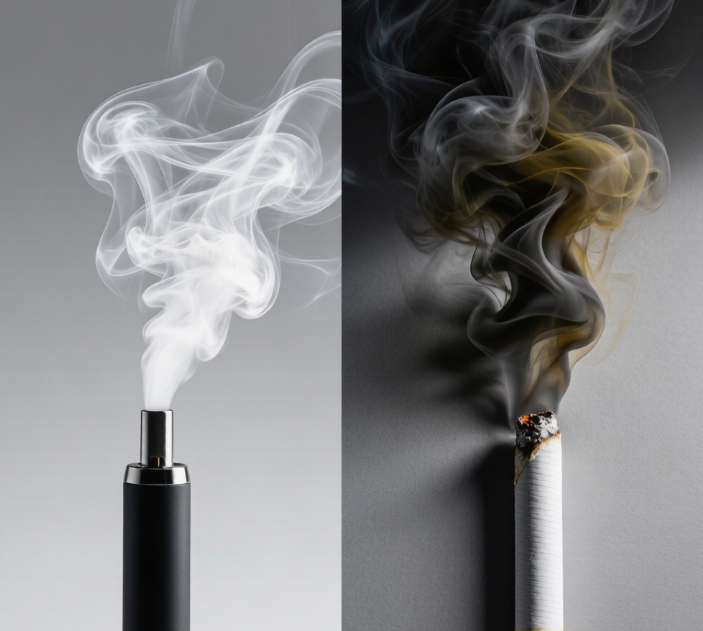
The key distinction is fundamental to understanding what is in a vapor versus what is in smoke: vapour is not smoke. Smoke is produced by combustion — burning organic material at temperatures exceeding 600°C, which creates thousands of new chemical compounds through thermal decomposition. Vapour, by contrast, results from controlled heating below combustion temperature, producing a significantly simpler chemical profile.
Understanding what is in a vapor means looking at two stages: what goes into the e-liquid before heating, and what comes out of the device after the liquid passes through a heated coil.
To answer what is in a vapor, we start with the e-liquid itself. Regulated e-liquids sold in Canada typically contain four primary ingredients, plus nicotine in most formulations.
Propylene glycol is a synthetic liquid that absorbs water and serves as a carrier for flavourings and nicotine. It is the same compound used in:
PG is a significant part of what is in a vapor and produces the “throat hit” sensation that many former smokers look for in a vaping device. It is generally recognized as safe for ingestion and inhalation exposure at regulated levels, though long-term data specific to daily inhalation is still emerging.
Vegetable glycerin is a thicker, sweeter liquid derived from plant oils (usually palm, soy, or coconut). It is also widely used in food (E422), cosmetics, and pharmaceuticals.
VG is responsible for vapour density — the visible cloud that users exhale, and understanding what is in a vapor means understanding that VG makes up the bulk of that cloud. Higher-VG e-liquids produce more voluminous vapour but a milder throat sensation. Most commercial e-liquids use a blend of PG and VG, with ratios like 50/50 or 70/30 (VG/PG) being common.
Nicotine is the addictive alkaloid naturally present in tobacco. In Canadian e-liquids, the maximum permitted concentration is 20 mg/mL (2%), set by federal regulation. Nicotine in vaping products is typically pharmaceutical-grade nicotine extracted and purified for controlled dosing. When people ask what is in a vapor, nicotine is often the first concern — and it is the ingredient that makes these products addictive.
It is important to note that while nicotine is addictive and not risk-free, it is not the primary cause of smoking-related cancers — the carcinogens in cigarette smoke come from combustion, not from nicotine itself.
| Component | Cigarette Smoke | E-Cigarette Vapour |
|---|---|---|
| Chemical compounds | 7,000+ (at least 69 carcinogens) | ~100–200 detected |
| Tar | Yes — produced by combustion | No — no combustion |
| Carbon monoxide | Yes — major component | No — no combustion |
| Nicotine | Yes (variable, ~10–15 mg typical) | Yes (capped at 20 mg/mL in Canada) |
| Formaldehyde | Significant quantities | Trace amounts (device-dependent) |
| Heavy metals | Arsenic, cadmium, lead, benzene | Trace metals from coil materials |
| Particulate matter | High — fine and ultrafine particles | Lower — primarily liquid droplets |
This table does not mean vaping is safe. As the World Health Organization states, e-cigarettes are “harmful to health and are not safe.” The chemical comparison simply illustrates that vapour and smoke are fundamentally different substances with different risk profiles.
Under the Tobacco and Vaping Products Act, all vaping products sold in Canada must meet specific requirements relevant to what is in a vapor:
These regulations mean that, for products sold through legitimate Canadian retailers, there is a baseline of ingredient transparency and quality control that does not exist in all jurisdictions. In practical terms, a Canadian vaper who buys from licensed retailers has more clarity about what is in a vapor than someone purchasing unregulated products from unknown sources.
Exhaled vapour contains most of the same compounds as inhaled vapour but in lower concentrations.
“Safer” is a relative term. Public Health England and the Royal College of Physicians have both stated that vaping is likely significantly less harmful than smoking. However, the WHO and Health Canada emphasize that vaping is not harmless — particularly for non-smokers and youth. If you don’t already use nicotine, there is no reason to start.
Yes. Many e-liquids are available in 0 mg/mL (nicotine-free) formulations. Without nicotine, the vapour consists only of aerosolized PG, VG, and flavourings. However, Health Canada still regulates these products under the TVPA, as the act of vaping itself — even without nicotine — involves inhaling substances into the lungs.
Check out our full blog for more in-depth vaping guides, product reviews, and Canadian compliance updates — all written for adult vapers.Click Here to Visit WillVape Blogs Now
The relationship between vaping frequency and health is one of the most pressing questions for anyone who uses e-cigarettes. How many puffs
If you’re wondering can you vape after a filling, you’re not alone. Many vapers ask this exact question after leaving the