Vaping Frequency and Health: What’s the Safe Range?
The relationship between vaping frequency and health is one of the most pressing questions for anyone who uses e-cigarettes. How many puffs

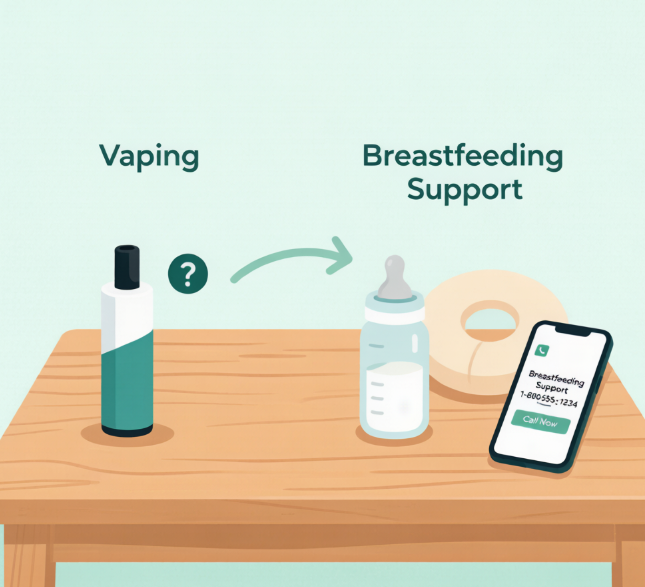
If you are a new parent wondering can you vape while breastfeeding, the answer from medical authorities is clear: no, it is not recommended. Nicotine — the active stimulant in all vaping products — passes into breast milk and can affect your baby’s health and development. In this article, we examine what Health Canada, the CDC, and peer-reviewed research say about vaping and breastfeeding, so that you can make an informed decision for yourself and your child.
Key Takeaway: The question can you vape while breastfeeding has been studied extensively. Every major health authority — including Health Canada and the CDC — advises against using any nicotine products while breastfeeding.
The short answer to can you vape while breastfeeding is: no, you should not vape while breastfeeding. Nicotine is a pharmacologically active substance that transfers from a parent’s bloodstream into breast milk. When a nursing infant consumes that milk, they ingest nicotine along with it. This is not a theoretical concern — it has been confirmed by decades of clinical research on smoking, nicotine replacement therapy, and lactation.
Vaping products, while they do not involve combustion like traditional cigarettes, still deliver nicotine to the user. In Canada, where the TVPA caps nicotine concentration at 20 mg/mL, even the lowest-strength vaping liquids contain enough nicotine to be detectable in breast milk after use. So when someone asks can you vape while breastfeeding, the delivery method — whether combustible cigarette, vape, or nicotine patch — does not change the fundamental issue: nicotine itself is the substance of concern.
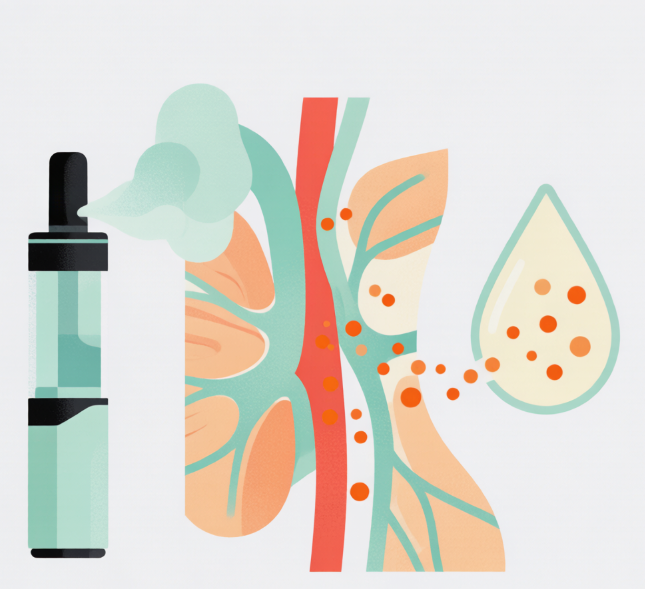
Breast milk is produced from nutrients and compounds circulating in a parent’s bloodstream. Because nicotine is absorbed rapidly into the bloodstream — whether through the lungs via vaping or through the skin via a patch — it reaches breast-producing tissue within minutes. From there, nicotine passes into the milk supply, where it remains until it is metabolised and cleared from the body.
Research compiled by the Centers for Disease Control and Prevention (CDC) confirms that nicotine concentrations in breast milk are typically two to three times higher than in the parent’s bloodstream. This means that even a small amount of vaping can result in a meaningful nicotine dose for a nursing infant, whose body is far smaller and less capable of processing the substance.
Nicotine levels in breast milk peak approximately 30 to 60 minutes after use. While levels gradually decline over the following two to three hours, trace amounts can persist for longer periods. This is why the question can you vape while breastfeeding cannot be solved simply by timing — even if you wait several hours between vaping and feeding, you are not eliminating the risk entirely.
For parents who ask can you vape while breastfeeding if they reduce their usage, the answer remains the same in principle: any nicotine exposure through breast milk carries potential risks to the infant. Reducing frequency may lower the dose, but it does not remove the concern. The most responsible course of action for any nursing parent is to treat the question can you vape while breastfeeding as a prompt to seek cessation support rather than to seek permission.
The developing body of an infant is significantly more vulnerable to nicotine than an adult’s. Research has identified several areas of concern:
When considering can you vape while breastfeeding, it is important to weigh these risks seriously. The infant cannot choose their exposure — that responsibility falls entirely on the parent.
Beyond the nicotine that passes through breast milk, there is also the matter of secondhand vapour. Vaping aerosols are not harmless water vapour — they contain nicotine, propylene glycol, flavouring chemicals, and other compounds that can be inhaled by anyone nearby. Health Canada explicitly recommends against vaping around infants and children. So even if you are not breastfeeding at the moment of vaping, the question can you vape while breastfeeding extends to the air your baby breathes.
We recognise that some parents may find it extremely difficult to stop using nicotine entirely while breastfeeding. If you are in this situation and still asking can you vape while breastfeeding, the following harm-reduction strategies — while not eliminating risk — may help reduce exposure:
These steps do not make vaping while breastfeeding safe — they merely reduce the degree of risk. The only truly safe option is to avoid nicotine entirely during the breastfeeding period.
Canada offers several free, confidential resources for parents seeking help with nicotine cessation:
So, can you vape while breastfeeding? The answer from every major medical authority is no. Nicotine passes into breast milk, where it can affect your baby’s sleep, cardiovascular system, digestion, and long-term development. Vaping may eliminate some of the toxins found in cigarette smoke, but it does not eliminate the nicotine — and nicotine is the substance of primary concern during lactation.
If you are currently breastfeeding and using nicotine products, please reach out to a healthcare professional. Free, confidential support is available across Canada. Your decision matters — not just for your own wellbeing, but for the health of the child who depends on you. The question can you vape while breastfeeding deserves an honest answer, and the honest answer is: not if you can help it.
The short answer: There is no universally “safe” waiting time, but most experts recommend waiting at least 1.5 to 2 hours after vaping before breastfeeding.
However, the best and safest choice is to vape right after feeding, not before. This gives your body the maximum time to clear nicotine from your blood before the next feed.
Short answer: Not necessarily. Breast milk is still incredibly beneficial, even if you vape occasionally. The general medical advice is: breastfeeding with some nicotine exposure is still better than formula for most babies — provided you take steps to minimize the risk.
Short answer: Yes — but let’s be specific. Vaping itself doesn’t “ruin” your milk or make it poisonous, but the nicotine and other chemicals in vape juice do get into your breast milk, and that’s not great for your baby. It’s definitely better than smoking cigarettes, but it’s not harmless.
Check out our full blog for more in-depth vaping guides, product reviews, and Canadian compliance updates — all written for adult vapers.Click Here to Visit WillVape Blogs Now
The relationship between vaping frequency and health is one of the most pressing questions for anyone who uses e-cigarettes. How many puffs
If you’re wondering can you vape after a filling, you’re not alone. Many vapers ask this exact question after leaving the